The manic pixie dream girl is dead. Please stop digging her up.
I am, at my core, an unabashedly hateful woman. Not hateful in the dramatic villain sense,
I mean hateful in the sense that I cannot allow men to enjoy a single cultural phenomenon without at least briefly interrogating it. If there is something men have collectively decided is charming, sexy, or whimsical, I feel spiritually compelled to poke it with a stick until the underlying misogyny starts leaking out. So, once again I find myself in the position of ruining something that men have historically enjoyed very much: the Manic Pixie Dream Girl.
This came up recently while I was talking to a genuinely kind and well-meaning person who had finally watched Eternal Sunshine of the Spotless Mind after I recommended it. They were captivated by Clementine, which, to be fair, is a very normal reaction when encountering that character for the first time.

She’s colourful, impulsive, emotionally messy, and unpredictable in a way that feels exciting compared to the dull, grey emotional landscape of the male protagonist. They mentioned that they found themselves intrigued by her personality and slightly envious of her confidence, especially the way she seems able to move through the world without worrying too much about how she is perceived.
On the surface, that’s a fairly innocent observation. Plenty of people see aspects of themselves in fictional characters or wish they had a bit more of a certain trait. But as someone who has spent a long time thinking about how women are written in film, my brain immediately went to the same place it always does when men express fascination with characters like her.
Clementine is not really meant to be aspirational. She’s not written as a blueprint for how a woman should behave, nor is she supposed to be a whimsical fantasy object that exists purely to inspire admiration. She’s a complicated character with flaws, emotional wounds, and contradictions that make her human. The problem is that when men latch onto characters like this, they often aren’t responding to the complexity of the character itself. They’re responding to the archetype she belongs to, whether they realise it or not. That archetype is the manic pixie dream girl, and once you start noticing it, you see it absolutely everywhere.
For anyone unfamiliar with the term, the manic pixie dream girl is a very specific kind of female character who appears again and again in film and television, usually orbiting around a sad, emotionally stunted male protagonist. She’s quirky, spontaneous, and effortlessly cool in a way that feels magical compared to the monotony of the man’s life. She might have brightly dyed hair, an unusual sense of style, or some eccentric hobby that signals she’s different from the boring women the protagonist has known before. Importantly, though, she never strays too far from the Hollywood beauty standard. She’s allowed to be quirky, but only within very controlled limits.
The manic pixie dream girl exists primarily to shake the male lead out of his existential slump. She teaches him how to live, how to feel, how to see beauty in the world again. Her entire narrative function revolves around guiding him toward personal growth.

There are, unfortunately, many examples of this trope scattered throughout popular films. Summer from 500 Days of Summer is probably one of the most famous versions, though the film itself eventually tries to critique the fantasy that the male protagonist builds around her. Allison in Yes Man fits the mould perfectly, appearing as a quirky free spirit whose main role is to show Jim Carrey’s character how to embrace life again (take a shot every time Zooey Deschanel plays a MPDG). Ruby in Ruby Sparks offers a slightly more self-aware take on the trope, literally existing as a woman written into existence by a struggling male writer. Clementine in Eternal Sunshine of the Spotless Mind is often cited as one of the defining examples, alongside Ramona Flowers in Scott Pilgrim vs the World, Sam in The Perks of Being a Wallflower, Clair in Elizabethtown, Jess in New Girl, and Penny Lane in Almost Famous. You can trace the lineage even further back to characters like Annie Hall, whose quirky charm and unconventional behaviour became a template for decades of similar characters.
Once you start lining them up next to each other, the pattern becomes impossible to ignore. These women are rarely allowed to exist as fully realised people with their own interior lives. Instead, they function as catalysts for male transformation. Their quirks are charming because they disrupt the male protagonist’s dull routine, but those quirks are never explored deeply enough to become inconvenient or truly complicated. The manic pixie dream girl is whimsical without being threatening, emotionally open without demanding too much in return, and just mysterious enough to remain intriguing while still being easily digestible.
The question that always nags at me when thinking about this trope is a simple one: why does a woman’s “coolness” so often have to exist for the benefit of a man? Why is it so difficult for writers to imagine a female character who is eccentric, creative, or adventurous purely for her own enjoyment? The manic pixie dream girl trope suggests that a woman’s individuality is most valuable when it serves as a tool for male self-discovery. She is there to brighten his life, to pull him out of his emotional stagnation, to show him the beauty of the world. Meanwhile, her own inner world remains largely unexplored.
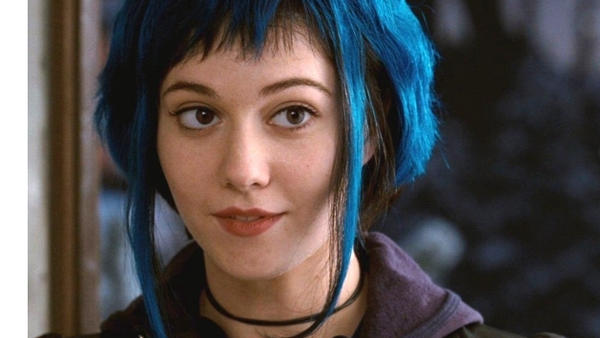
As someone who has unfortunately spent a fair amount of time around what I can only describe as cave-dwelling men, I’ve also experienced the real-life version of this phenomenon. More than once I have been compared to manic pixie dream girl characters, particularly Ramona Flowers. Apparently the act of dying your hair a few different colours over the years is enough to convince certain men that you are not a person with a normal, complicated life but rather some quirky indie-film fantasy character who exists to make their world more interesting. God forbid a woman pick up a bottle of hair dye or express a slightly unusual interest in art or music without being immediately categorised as a manic pixie dream girl by these troglodytes.
What makes the trope particularly frustrating is that it reflects a deeper cultural fantasy about women and emotional labour. The manic pixie dream girl reassures men that somewhere out there is a vibrant, emotionally intelligent woman who will wander into their lives and fix them simply by existing nearby. She will teach them how to feel things again. She will show them that life can be beautiful and spontaneous. She will patiently guide them through their existential crises without asking for much in return. In this fantasy, the woman’s purpose is not to pursue her own goals or desires but to function as a kind of emotional tour guide for the male protagonist.
The reality, of course, is that women who appear outwardly quirky or carefree often have complex lives that have nothing to do with saving men from themselves. The real-world equivalent of the manic pixie dream girl would probably be exhausted from carrying everyone else’s emotional baggage while simultaneously being expected to remain charming and upbeat. She would have bad days, frustrations, ambitions, and boundaries that complicate the neat narrative arc that films like to construct around her. In other words, she would be a normal human being rather than a whimsical accessory to someone else’s story.
For a brief moment in the early 2010s it seemed like the cultural conversation had finally caught up with this trope. Critics and audiences alike began pointing out how limiting and unrealistic the manic pixie dream girl archetype was, and many people assumed it would quietly disappear as filmmakers moved toward writing more complex female characters. Unfortunately, culture has a habit of recycling its worst ideas, and lately the trope seems to be creeping back into the spotlight. Once again we’re seeing female characters who appear effortlessly cool and mysterious, often paired with brooding male leads whose emotional growth depends entirely on the woman standing beside them.
Personally, I would love nothing more than to see the manic pixie dream girl finally laid to rest. She has spent decades doing unpaid emotional labour for mediocre male protagonists who refuse to develop personalities of their own. If men want more whimsy, colour, and emotional depth in their lives, they are perfectly capable of cultivating those things themselves. Women do not exist to function as magical narrative devices in someone else’s coming-of-age story.
-aleesha :3 (im going to start signing off like that)
Comments